
Many visitors assume their vacation begins at the resort pool. In reality, it begins the moment they step into their vehicle after landing. During Guanacaste Airport transportation in Costa Rica, the first visual impression is often of wide-open savannas, grazing cattle, and traditional hacienda buildings.
Those landscapes are not decorative scenery. They represent centuries of agricultural systems, colonial influence, and regional identity. At Costa Rica Fayla Tours, we believe your arrival should include context. Transportation is not just movement. It is orientation.
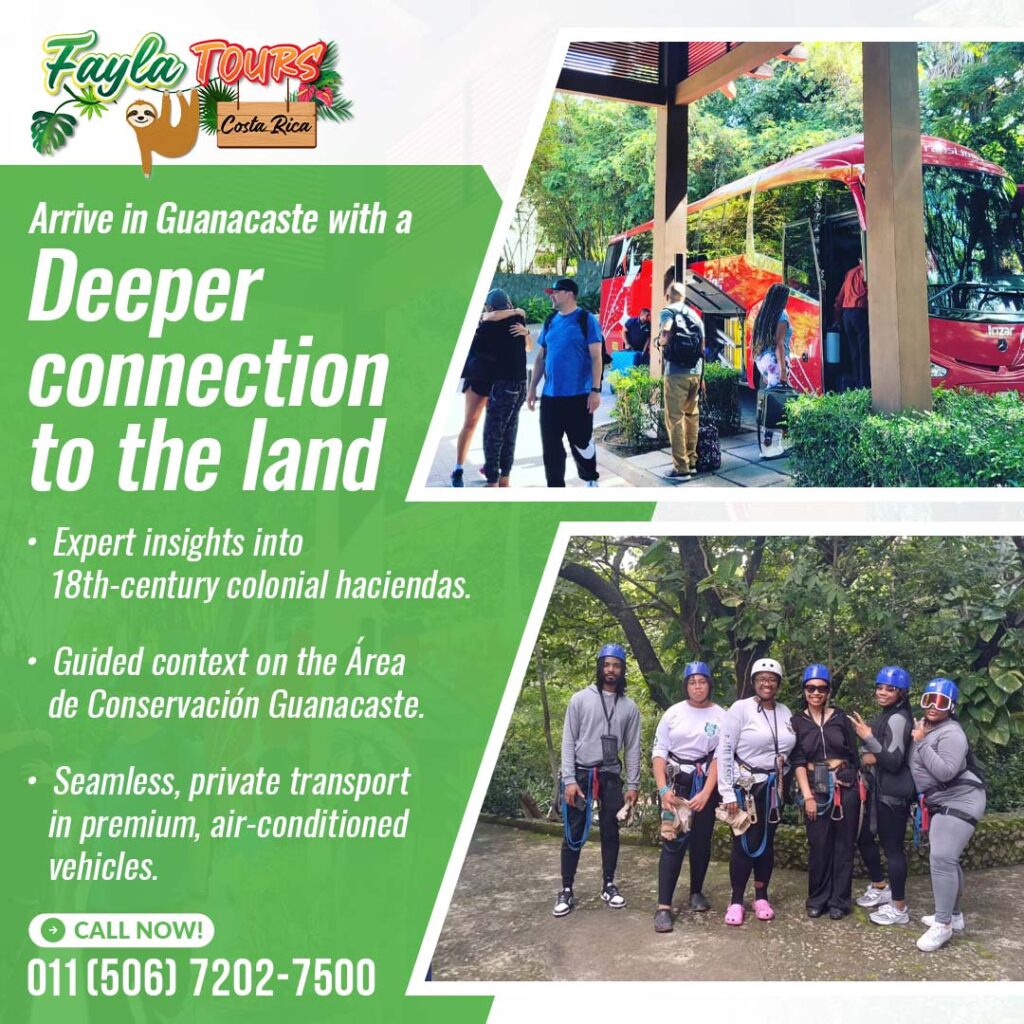
This guide connects the ranchlands you see during your transfer with archaeological sites, colonial churches, museums, battle landmarks, and UNESCO-recognized reserves across the country.
Key Takeaways
- The ranchlands and haciendas visible during your arrival are not random scenery. They represent colonial-era cattle systems that shaped architecture, trade routes, and regional identity.
- Indigenous sites such as Guayabo and the Diquís stone spheres show that organized societies and advanced engineering existed long before European influence.
- Colonial churches, battle sites, and preserved towns demonstrate how faith, defense, and governance influenced national development.
- UNESCO-listed reserves and protected parks combine biodiversity with historical and cultural meaning.
- A well-informed airport transfer can serve as your first cultural orientation, connecting landscape, history, and modern travel experience.
The Ranchlands You See on Arrival
The haciendas visible during airport transfers from Guanacaste Airport in Costa Rica were developed during the 18th and 19th centuries. Cattle ranching shaped settlement patterns, trade routes, and even cultural traditions in this region.
Clay tile roofs, interior courtyards, and thick adobe walls were climate-adapted solutions. These estates functioned as production centers, family residences, and community anchors.
When guests ride in our Costa Rican Guanacaste Airport shuttle, we explain that fencing patterns and open grazing lands reflect long-standing economic continuity.
Architectural Features of Colonial Haciendas
Understanding structure helps you read the landscape.
Look for:
- Long single-story buildings
- Central patios designed for airflow
- Elevated roofs with wide overhangs
- Wooden corral systems nearby
These details reveal how architecture responded to the environment and agricultural needs.
Cultural Impact of Ranching Systems
Ranching influenced more than land use. It shaped:
- Local cuisine centered around beef and corn
- Music traditions tied to rural life
- Seasonal festivals celebrating harvest cycles
The ranch landscape visible during the transportation is therefore a cultural archive, not just farmland.
Before Colonial Estates: Indigenous Engineering and Organization
Centuries before Spanish arrival, complex societies organized settlements with advanced planning.
Guayabo National Monument
Guayabo dates back nearly 2,000 years. Visitors can see:
- Stone-paved streets
- Engineered aqueduct systems
- Circular ceremonial plazas
Archaeologists recognize the site as evidence of structured chiefdom societies. Its water management systems demonstrate technical sophistication.
Guests using airport transfers from Guanacaste Airport in Costa Rica often express surprise when they learn that hydraulic engineering predated European contact.
The Stone Spheres of the Diquís
Created between 500 and 1500 CE, these precisely shaped spheres are internationally recognized heritage symbols. Some exceed two meters in diameter.
Their alignment suggests ceremonial or political organization. Knowing this indigenous timeline adds depth to the ranch estates visible during your Costa Rican airport shuttle in Guanacaste Airport.
Colonial Faith and the Formation of Town Centers
Spanish colonization reorganized communities around churches and plazas. This urban model still defines many towns.
Orosi Church (1743)
One of the oldest active churches in the country, Orosi represents early colonial adaptation to seismic and climate conditions.
Basilica in Cartago
A pilgrimage destination, the basilica symbolizes national religious continuity and collective identity.
Iglesia de Ujarrás
These preserved ruins offer insight into early Spanish construction techniques. We often explain how church-centered planning influenced civic organization and social structure.
Hacienda Architecture and National Defense
Not all estates remained agricultural. Some became symbolic landmarks.
La Casona de Santa Rosa
Located within Santa Rosa National Park, this hacienda was the site of the 1856 battle against William Walker’s forces.
Architecturally, it resembles other ranch structures. Historically, it represents national sovereignty. Guests booking airport transfers to Westin Playa Conchal often pass near the protected dry forest connected to this site.
Historic Identity and Landscape Preservation
Santa Rosa demonstrates how ranching landscapes can also preserve military and national memory. The site integrates environmental conservation with historical commemoration.
UNESCO Natural Sites With Cultural Depth
Heritage in this country extends beyond built structures.
Área de Conservación Guanacaste
Área de Conservación Guanacaste is a UNESCO-listed area spanning dry forest, wetlands, and volcanic terrain. It supports more than 500 bird species and thousands of insect species.
The restoration model used here is internationally studied.
Talamanca Range–La Amistad Reserves
This mountain system contains approximately 10,000 flowering plant species and more than 200 mammal species.
Glacial formations shaped its valleys. Indigenous groups consider portions of the range sacred.
When guests experience Guanacaste Airport transportation in Costa Rica, they are entering a nation where biodiversity and heritage operate together.
Museums That Clarify the Timeline
Interpretive spaces provide chronological structure.
Museo Nacional
Housed in a former fortress, this museum connects indigenous artifacts with colonial and modern developments.
Gold and Jade Museums
These collections reveal craftsmanship, trade networks, and symbolic systems that predate colonial estates.
Travelers using airport transfers from Guanacaste Airport in Costa Rica often extend their itinerary to include museum visits for a deeper appreciation.
Colonial Towns That Preserve Urban Memory
Entire towns preserve historic structures.
Cartago
Former capital with layered colonial architecture and religious landmarks.
Heredia and Alajuela
These towns maintain traditional plazas, cathedrals, and civic buildings reflecting 19th century political growth.
San José
The capital features the National Theater, built during the coffee boom. It reflects economic transformation tied to agricultural exports.
Guests arranging Guanacaste Airport transfers to the Westin Playa Conchal sometimes add cultural day trips after settling into their resort.
Natural Sites With Historical Meaning
Some parks combine environmental and cultural significance.
Rincón de la Vieja National Park
Volcanic activity influenced indigenous myths and agricultural practices.
Arenal Volcano National Park
Volcanic eruptions reshaped settlement patterns and later drove tourism expansion.
Santa Rosa National Park
Preserves both dry forest ecosystems and national battle history.
These sites demonstrate that environmental landscapes also carry cultural narratives.
How Costa Rica Fayla Tours Integrates History Into Transfers
Transportation can be purely logistical. We choose a different approach.
Costa Rica Fayla Tours provides:
- Private, door-to-door service
- Meet-and-greet assistance at the main exit
- Modern, fully insured vehicles
- Fixed pricing with no hidden fees
- Flexible stops upon request
Private and Personalized Experience
Our Costa Rican airport shuttle at Guanacaste Airport is never shared with unknown passengers. Privacy allows relaxed conversation and personalized recommendations.
Vehicles include SUVs, minivans, and minibuses suitable for families and groups. Child seats are available upon request at no additional cost.
For guests booking Guanacaste Airport transfers to Westin Playa Conchal, this flexibility ensures a smooth transition from arrival to resort.
Why Cultural Context Improves Travel Satisfaction
Tourism research consistently shows that cultural engagement increases visitor satisfaction and strengthens destination loyalty (Chen & Rahman, 2018). In simple terms, the more involved travelers become in a destination’s culture, the more meaningful their trip feels. Chen and Rahman found that when visitors actively participate and connect with local traditions, people, and stories, they experience stronger cultural contact. That deeper interaction leads to more memorable travel experiences.
The study also showed that memorable experiences directly influence whether travelers want to return and whether they recommend the destination to others. Engagement alone is not enough. What truly leaves a lasting impression is genuine cultural interaction. When visitors feel connected to the local culture, those memories stay with them long after the trip ends, and that connection increases the likelihood of repeat visits and positive word-of-mouth.
Travelers who understand a destination’s history report a stronger emotional connection and a higher likelihood of return visits.
By integrating storytelling into Guanacaste Airport transportation in Costa Rica, we help guests begin their vacation with understanding rather than uncertainty.
Arrival Is the First Chapter
The drive from the airport is not separate from your vacation. It is the first interpretive moment.
Whether you are arranging airport transfers from Guanacaste Airport in Costa Rica or planning airport transfers to Westin Playa Conchal, the ranchlands, archaeological heritage, and conservation leadership provide a layered introduction.
Costa Rica Fayla Tours remains committed to punctual service, bilingual drivers, private vehicles, and meaningful context from the moment you exit the terminal.
What Guests Say About Their Experience
Reliable service and cultural insight matter most during airport transfers. Here is what recent travelers have shared about their experience.
Smooth Transfers to Westin Reserva Conchal
Stephanie Raine Lee shared: “The car ride was smooth, seats were clean, and did not feel stuffy. We would definitely use the service again, and highly recommend Fayla Tours to others.”
Knowledgeable Drivers and Flexible Scheduling
Jane Lawrence noted: “Chris was very knowledgeable about Costa Rica, its history, culture, politics, etc. He made the drive so informative and hassle-free.”
Personable and Responsive Service
M. Batchelor shared: “Chris handled our airport transfers to and from our hotel and we really enjoyed getting to know him. He was kind, knowledgeable, and personable. The company was very responsive easy to work with. We will definitely use Fayla Tours again next time we’re in Costa Rica!”
Consistency and Reliability
D O wrote: “The driver arrived exactly on time, the vehicle was spotless and very comfortable, and the price was great. The service felt reliable and the staff were friendly, making the whole ride enjoyable and affordable. I would definitely use them again.”
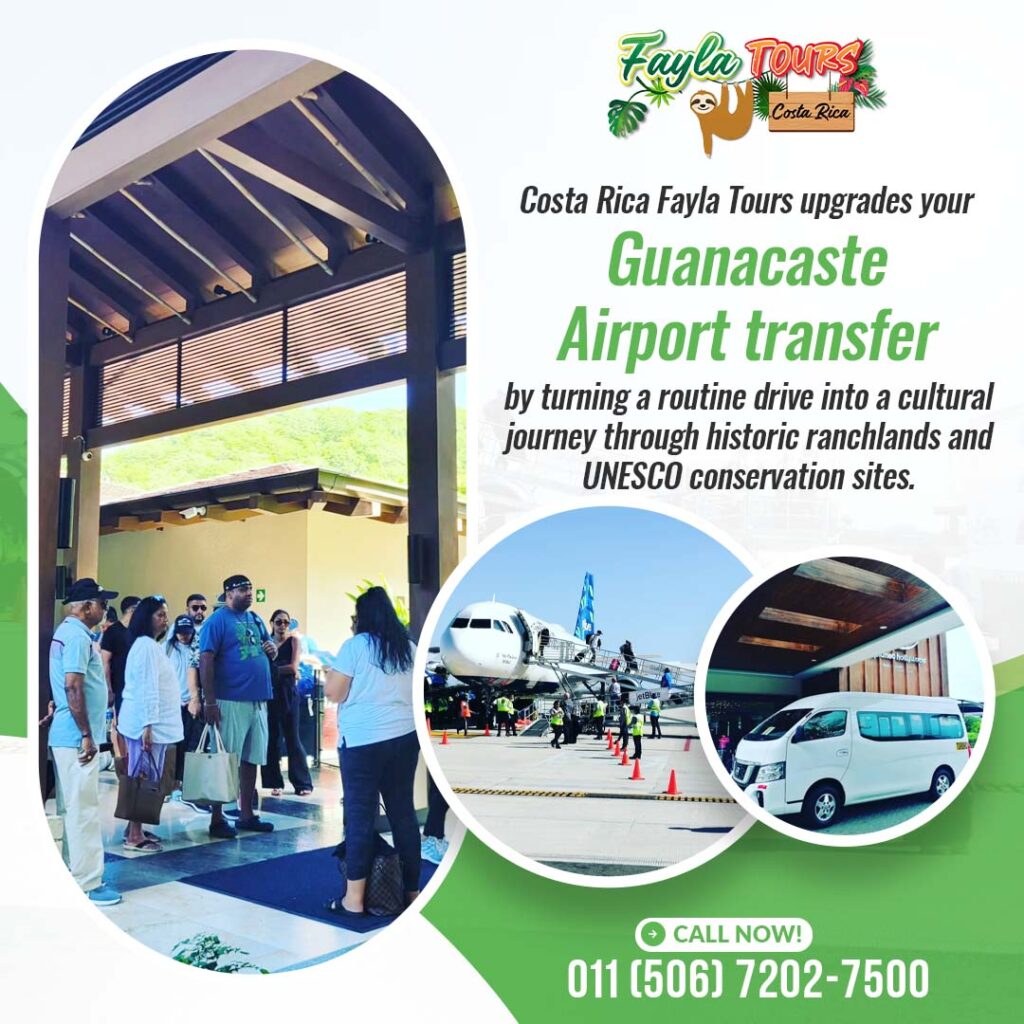
Choose Professional Guanacaste Airport Transfers
The open pastures and colonial estates visible on arrival represent only one chapter in a longer story. Indigenous engineering, colonial faith, national resilience, and environmental leadership form a continuous narrative across the country.
With Costa Rica Fayla Tours, your Costa Rican Guanacaste Airport shuttle services become more than transportation. It becomes orientation, education, and a safe passage into a country shaped by history and nature working together. To learn more, contact us today at 011 (506) 7202-7500 or info@costaricafaylatours.com or via WhatsApp at (506) 8797-1515.