
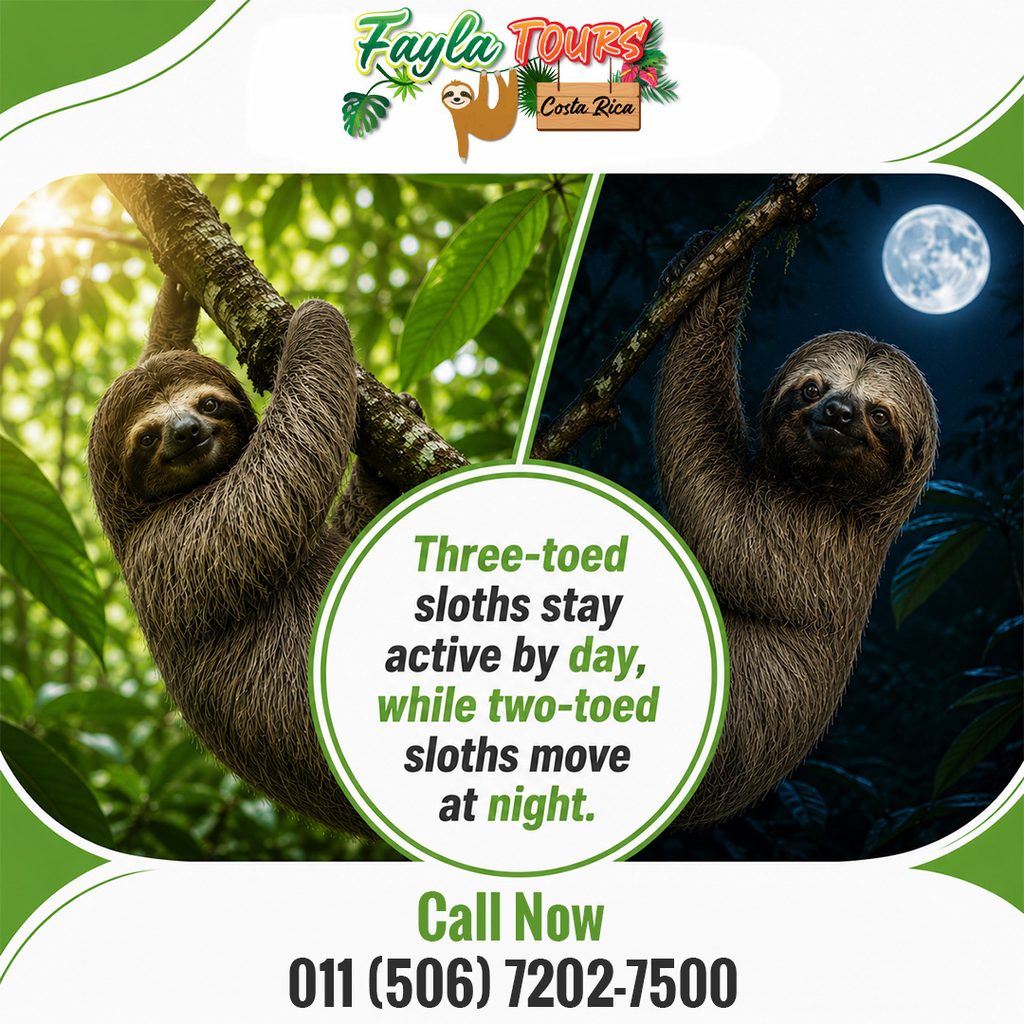
Most sloths spotted in Guanacaste are three-toed sloths, since they stay active during daylight hours. Two-toed sloths live here too, but they feed and move at night, so guides find them far less often on daytime tours. If you’re arranging airport transfers from Guanacaste in Costa Rica around your trip with Costa Rica Fayla Tours, it’s worth planning at least one outing after dark to catch both species.
How Do Two-Toed and Three-Toed Sloths Differ?
The two species look and behave differently once you know what to check. Three-toed sloths have a shorter tail, a rounder face, and dark eye patches that resemble a mask. Two-toed sloths grow larger, move faster, and lack that facial mask entirely. Every tour where guides help identify each type is listed on our Costa Rican Guanacaste airport shuttle services page.
Diet sets them apart as well. Three-toed sloths eat almost exclusively leaves, while two-toed sloths supplement leaves with fruit, insects, and the occasional small lizard, which explains why they range further at night.
Claws offer another clue if you get a close look. True to their names, three-toed sloths have three claws on each front limb, while two-toed sloths have only two. Guides in Guanacaste use this detail to confirm a sighting when the face is partly hidden by leaves.
Why Are Three-Toed Sloths Easier to Spot in Guanacaste?
Three-toed sloths sleep and forage on a schedule that overlaps with daytime tours, which is the main reason guides spot them more often. They also tend to stay lower in the canopy of dry forest reserves like Cabro Muco, near the Miravalles volcano foothills.
Two-toed sloths climb higher and rest in denser cover, and their nocturnal habits mean most sightings happen during specialized night walks rather than standard morning excursions. A peer-reviewed study on two-toed sloths found that noise exposure increases restlessness and hiding in this species, which is why our night walks stay small and quiet for a calmer, more reliable sighting.
A Quick Field Guide
Look for a rounded, masked face and slow movement for a three-toed sloth. A larger body, no mask, and nighttime activity point to a two-toed sloth.

Which Sloth Tours Give the Best Chance to See Both?
Combining a morning and an evening excursion is the most reliable way to see both species on one trip. Our daytime suspension bridge hike at Costa Rica Fayla Tours covers three-toed sightings, while a dedicated night walk covers the two-toed side of the pairing.
Travelers arriving through our Guanacaste airport shuttles in Costa Rica can schedule both tours around a single hotel stay, since our private transfers and excursions run from the same pickup points across the region.
Because both tours use small, private groups, guides can slow down or wait quietly when a sloth is spotted, rather than rushing past it to keep a large group moving. A minimum of two passengers applies per booking, and drivers coordinate pickup times with your flight schedule.
Our airport transportation services from Guanacaste Airport in Costa Rica pair naturally with a wildlife day like this one, and recent photos from both tour types are posted on our Google Business Profile, updated after every departure.
Not sure which pairing fits your travel dates? Contact Costa Rica Fayla Tours at 011 (506) 7202-7500 or info@costaricafaylatours.com or on WhatsApp at (506) 8797-1515, and we will build a schedule that gives you the best shot at spotting both species.